

Engine Accessories
EPHIL: Your Trustworthy Engine Accessories Supplier!
EPHIL is the leading supplier of gasoline engines and power systems for model aircraft and drones. Our company was established in 2020. Our main products include aircraft gasoline engines, glow gasoline engines and engine parts. Some models are equipped with larger air, fuel and oil filters, hardened crankshaft journals and self-draining choke carburetors . These engines are widely used in model aircraft, drones and other equipment, with powers ranging from 100 horsepower to 375 horsepower, and are exported to more than 25 countries and regions.
Rich Experienced
Our team consists of several engine engineers, electrical engineers, and product designers. We are good at engine design, production and debugging, and work closely with well-known companies such as Kenncth, Vossen, Westin, ACDelco, Coverking, etc.
High Production
We have our own R&D center and complete production workshop, equipped with professional cylinder processing, quality measurement, CNC, precision lathes and other equipment, which can fully cover the needs of large-volume urgent orders.
Quality Assurance
All the products have registered trademarks in Germany and the United States, invention and design patents in the United States, Japan and China, and have obtained CE, FCC certification and RoHS certificates.
Customized Services
These engines are widely used in remote control aircraft, aircraft models, and UAV models, and support OEM and ODM custom designs to provide versions with different capacities and strokes.
-
![Carburetor Diaphragms And Repair Kits]()
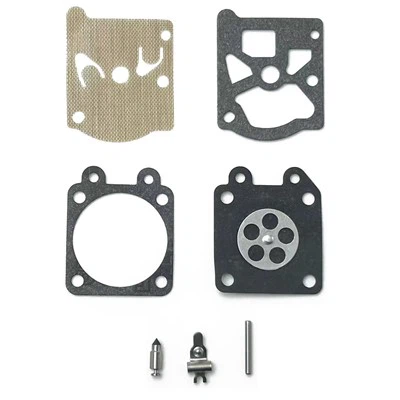
Carburetor Diaphragms And Repair Kits
Carburetor kits that could be used to repair the jammed or aged Walbro carburetors.Add to Inquiry -
![EPHIL Iridium Spark Plug]()
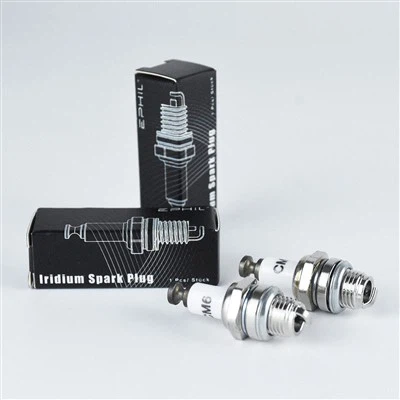
EPHIL Iridium Spark Plug
EPHIL Iridium Spark Plug Model/Size: CM6 Brand: EPHIL Electrode Material: Iridium Application:Gasoline RC engines Electrode Material The electrodes of common spark plugs are nickel alloy or platinumAdd to Inquiry -
![CDI Electronic Ignition Unit For Single-Cylinder Gas Engine]()
CDI Electronic Ignition Unit For Single-Cylinder Gas Engine
The timing mark is an arbitrary alignment point shared by the engine case and stator plate. It indicates the point at which the top of the piston's travel is equivalent to the trigger point on theAdd to Inquiry -
![E9 Glow Plug For Gasoline Engine]()
E9 Glow Plug For Gasoline Engine
These rpm meters have electronic circuitry, processor, sensor, and LCD or LED readout. These instruments can perform statistical calculations. They can measure the rotation speed of the motor moreAdd to Inquiry -
![Engine Tachometer]()
Engine Tachometer
Dimension: 50×20×16 mm. Voltage: 3V - 16V. Working Current: 10mA. Working Temperature: -10℃ - 65℃Add to Inquiry -
![Hall Effect Engine Ignition Sensor]()
Hall Effect Engine Ignition Sensor
Weight: 7.0gAdd to Inquiry -
![CM-6 Iridium Spark Plug]()
CM-6 Iridium Spark Plug
Weight: 13.5g. Center Electrode Material: IridiumAdd to Inquiry -
![E8 Glow Plug for Gasoline Engine]()
E8 Glow Plug for Gasoline Engine
Model: E8 glow plug. Weight: 3.6g. Voltage: 7.4V-14.8V. Working Current: 500mA-700mAAdd to Inquiry -
![E9 Glow Plug for Gasoline Engine]()
E9 Glow Plug for Gasoline Engine
Model: E9 glow plug. Weight: 3.6g. Voltage: 7.4V-14.8V. Working Current: 500mA-700mAAdd to Inquiry -
![CDI Electronic Ignition Unit for Single-Cylinder Gas Engine]()
CDI Electronic Ignition Unit for Single-Cylinder Gas Engine
Input Voltage: 6V - 14V. Output Voltage: 2kV. Static Electric Current: 30mA. Work Electric Current: 300mA (±3%)Add to Inquiry -
![CDI Electronic Ignition Unit for Twin-Cylinder Gas Engine]()
CDI Electronic Ignition Unit for Twin-Cylinder Gas Engine
Input Voltage: 6V - 14V. Output Voltage: 2kV. Static Electric Current: 30mA. Work Electric Current: 300mA (±3%)Add to Inquiry -
![EPHIL AET Ignition System For Single-Cylinder Glow Plug Engine]()
EPHIL AET Ignition System For Single-Cylinder Glow Plug E...
Model: AET Power System Version G-1.1. Input Voltage: 6V --- 8.4V. Output Voltage: 0V --- 1.6V. Work electric Current: 600 mA --- 700mAAdd to Inquiry


What is Engine Accessories?
Engine accessories are hundreds of different parts that complete an engine. They are parts connected to, or used with, an engine but not essential to its operation, such as a generator or a hydraulic pump. Most engine accessories are driven through the engine accessory drive. One single engine has an average of 80 different accessories, manufactured by different suppliers. The array of components ranges all the way from starter motors, fuel pumps, hydraulic pumps, actuators, sensors, and valves all the way to wiring harnesses and tubing.
Rich Variety
Our wide range of engine components includes engine blocks (cylinder blocks), combustion chambers, cylinder heads, pistons, crankshafts, camshafts, timing chains, valve trains, spark plugs and more, available in a variety of materials and sizes.
Durable
Made from tinned copper, these engine fittings are highly conductive and corrosion-resistant, and feature multiple ports for multiple cable connections.
Quick Cooling
There is a cooling water jacket in our cylinder head, and the cooling water hole at the lower end is connected to the cooling water hole in the cylinder block. They use circulating water to cool high-temperature components such as the combustion chamber, which is beneficial to improving the compression ratio and engine stability.
Easy to Connect
These engine ground wires are made of braided copper wire, which is highly flexible and bendable. It can adapt to different installation situations and complex vehicle structures, ensuring a tight fit of the ground strap and effective grounding.
Types of Engine Accessories


The Engine Block
The engine block, also referred to as the cylinder block, is a core part of an engine that houses all the major engine parts which make up the bottom end of the engine.
The crankshaft rotates here, and the pistons move up and down within the cylinder bore, fired by fuel combustion. In some engine designs, the cylinder block is also responsible for holding the camshaft.
The engine block has so many holes to accommodate cylinders as well as create paths for the flow of water and oil that help to cool and lubricate the engine. Water flow paths are wider than oil paths. These paths are intentionally designed to reduce the temperature of the engine and to lubricate all engine parts.
When the cylinder head is attached to the top of the engine block, the pistons move up and down in the cylinders, spinning the crankshaft, which in turn powers the wheels. The oil pan sits at the engine block’s base, serving as an oil reservoir from which the oil pump can draw and feed the oil passages and moving parts.
- Common Symptoms:
(1)Poor engine performance is caused by low engine compression.
(2)Visible engine smoke.
(3)Engine overheating is caused by leaking antifreeze.
(4)Discoloration in a car’s oil or antifreeze.
(5)Leaking oil or coolant.
(6)Frozen coolant in the radiator.
(7)Low levels of coolant.
The Piston
Pistons are part of your engine. The main function of the piston is to convert the pressure created by the burning air-fuel mixture into a force that acts on the crankshaft.
The shape of the piston mainly depends on the type of internal combustion engine. Gasoline engine pistons tend to be lighter and shorter than diesel engine pistons.
The piston is connected to the crankshaft via a connecting rod, and the piston is attached to the connecting rod by a short hollow tube called a wrist pin, or gudgeon pin.
This piston pin carries the full force of the combustion. These parts together are referred to as the piston assembly.
The narrow gap between the piston and the cylinder wall is bridged by the piston rings, which fit into the piston grooves of the so-called piston band. The spaces between these grooves are called ring lands.
- Functions:
(1)Contributes to the heat dissipation generated during combustion.
(2)Ensures the sealing of the combustion chamber and prevents gas leakage and oil penetration into the combustion chamber.
(3)Guides the movement of the connecting rod.
(4)Ensures continuous gas exchange in the combustion chamber.
(5)Creates the variable volume in the combustion chamber.
- Common Symptoms:
(1)White or gray exhaust smoke
(2)Excessive oil consumption
(3)Low power for acceleration
(4)Overall loss of power or poor performance
The Crankshaft
The crankshaft is essentially the backbone of the internal combustion engine. The crankshaft is responsible for the proper operation of the engine and the conversion of linear motion into rotary motion.
It takes the energy of the pistons moving up and down and converts it into rotational energy that moves your car’s wheels. The crankshaft is in the crankcase, which is below the engine block.
Crankshafts are usually made from steel due to the overall strength of the metal.
Crankshafts are often designed in one piece and not in multiple pieces. This is because it allows for heavier stress when driving and limited oscillation space, which is important given how much crankshafts rotate.
The crankshaft is attached to the engine at both ends by large bearings. It connects to the flywheel and thereby to the clutch.
When the clutch is engaged, the rotational energy of the crankshaft is transmitted through the gearbox and further through the differential to the drive shafts attached to the wheels, creating the car’s ability to move.
- Symptoms:
(1)Issues Starting the Vehicle.
(2)Intermittent Stalling.
(3)Check Engine Light Comes On.
(4)Uneven Acceleration.
(5)Engine Misfires or Vibrates.
(6)Rough Idle and/or Vibrating Engine.
(7)Reduced Gas Mileage.
The Camshaft
A camshaft is a relatively simple component of an engine – a simple piece of rod or shaft along which are positioned shaped cams, these have been known as “cam lobes”.
As the shaft is rotated, the shape of the cam allows a valve to be acted upon to a degree proportional to the strength of its shape – the speed of rotation controls the speed of action.
In a modern internal combustion engine, they are typically, but not necessarily, located directly above the cylinder banks where they act to control the valves.
Their calibration precisely controls the amount of air-fuel mixture entering the chamber and how efficiently the spent exhaust gases from the previous ignition can exit the chamber to make way for the next charge.
- Symptoms:
(1)Active or flashing check engine light.
(2)Loss of power.
(3)Steady popping/backfire in the intake manifold or exhaust (extreme wear).
(4)Loud ticking or tapping sounds.
(5)Metal debris in the engine oil.
(6)Cylinder misfire.
(7)Increased emissions because of misfiring.
(8)Visible signs of damage.
The Connecting Rod
As the name suggests, a connecting rod is a piece of metal that connects the piston to the crankshaft. They are usually made of either steel or aluminum.
A connecting rod, also called a ‘con rod’, is part of an engine that connects the piston to the crankshaft.
The connecting rod, together with the crank, converts the stroke movement of the piston into the rotation of the crankshaft.
The part of the connecting rod that connects to the piston is called the small end, and the end that attaches around the crankshaft is called the big end. The big end will have bearing inserts that minimize friction and maintain accurate oil clearance with the connecting rod journal on the crankshaft.
Many connecting rods have a hole drilled from the big end up through the shaft to an outlet hole somewhere along their length. This passage allows oil to flow up the connecting rod from the big end and spray onto the pressure area of the cylinder wall where friction is greatest.
- Symptoms:
(1)Low Compression
(2)Engine Knocking Sounds (Rod Knock)
(3)Low Oil or Oil Pressure
(4)Visibly Bent or Damaged Rod
(5)Seized Engine
Timing Belts
The timing belt is an integral part of your vehicle’s engine and ensures that many of the moving parts work together with precise timing for optimum efficiency and performance.
Your timing belt coordinates the engine’s combustion cycle by connecting the crankshaft and camshaft.
The crankshaft rotates with the movement of the pistons and the camshaft controls the movement of the intake and exhaust valves while ensuring that the pistons do not hit any of the valves. Modern timing belts are made of rubber, synthetic rubber such as neoprene, polyurethane, or highly saturated nitrile with high-tensile reinforcement cords made of Kevlar, polyester, or fiberglass.
- Symptoms:
(1)Ticking noise coming from the engine
(2)The engine won’t turn over.
(3)The engine acts up between 2,000 – 4,000 RPM.
(4)The engine misfires.
(5)More smoke and fumes than normal
(6)Oil leaks from the front of the motor
Spark Plugs
Spark plugs are located above each of the cylinders. As the name suggests, spark plugs are part of your car’s engine that ignites the air and fuel, causing combustion in the engine.
The purpose of a spark plug is to convert high-voltage electricity (produced by an ignition coil in modern engines) into a spark. The spark is created in the combustion chamber and ignites the air-fuel mixture just before the combustion/power stroke.
A spark plug has a threaded metal sleeve electrically insulated from a center electrode by a ceramic insulator. The center electrode, which may contain a resistor, is connected by a heavily insulated wire to the output terminal of an ignition coil or magneto.
- Symptoms:
(1)Reduced gas mileage.
(2)Lack of acceleration.
(3)Hard starts.
(4)Engine misfires.
(5)Rough idling.
Factors to Consider When Choose Engine Accessories
The engine is the most important part that keeps your tractor moving. Therefore, choosing the right engine part is very important for you to continue your activities. Paying attention to the following elements while purchasing engine parts will ensure that you get the right engine part . Here are the things you should pay attention to.
Engine Part Quality
Quality is the most important factor to consider when purchasing engine parts. In many cases, quality even precedes certifications. Because in order for an engine to work effectively, quality should not be compromised.
When choosing a part manufacturer, you should always choose manufacturers who pay attention to details and give importance to quality. The implementation of strict quality controls and compliance with international standards are the most important indicators of this. Choose an engine part manufacturer whose dedication to care and quality is unmatched . Ensure strict quality controls are in place and comply with all international standards.
Price
It will always be the best choice to make a long-term cost analysis for the engine part you will buy, rather than the price tag. Even if you find a piece below market prices, you should research it well. Because a poor quality part can damage your engine and cause much more money out of your pocket.
Engine Part Warranty
Another important factor to consider when purchasing a part is whether the part comes with a guarantee of trust and accuracy. It is always best to purchase engine parts from manufacturers that produce engine parts. However, when purchasing parts, you should definitely learn about the warranty conditions.
Knowledge and Experience
You should always choose to work with a manufacturer that has the experience to support the products it produces. You can choose a company equipped with a wealth of industry knowledge, especially in the complexities of production. At the same time, consistency in delivery is also very important. Therefore, you should prefer companies that have knowledge and experience in the sector, give importance to delivery and after-sales service, and carry out these processes without any problems.
Customer Experience
A long-term partnership with customers and partners around the world is a sign of the lasting trust the engine part manufacturer has successfully built. That's why you should choose a manufacturer that takes customer service seriously. Because it is very important that the products you buy are delivered on time and that this problem is resolved by the manufacturer in case of any problem.
Maintenance of Engine Accessories
Change Engine Oil Regularly
The engine oil collect sediments and other dirt particles in the process. These particles often cause friction, which leads to mechanical wear. Thus, you should change your oil often to enhance engine efficiency.
Other than changing the engine oil, you should regularly check the oil levels with a dipstick. Engine oil reduces over time since some of it burns off or degrades. Always check the oil levels and refill when necessary so that your engine has enough to lubricate its moving components.
Clean the Air Filters
Your engine runs for as long as you are on the road. Therefore, it needs to breathe to reduce the chances of developing mechanical problems. Clean your air filters often to allow enough air in. If they are clogged beyond a cleanup, then change them.
Check for Leakage
Always inspect your airplane for signs of leaks before you hit the road. Check your spot for drops of oil or antifreeze. You could even smell these fluids even before you see them.
If you detect leaks, get professional help to cover seals that might have broken. Fluids may leak out to the sensitive components of the engine, which can lead to failure, and thus you need to act accordingly on time.
Refill Your Coolant
An engine has a cooling system that helps prevent overheating. One of the critical components of the cooling system is the coolant. Due to the impact of combustion, coolant levels can get low and cause your engine to overheat.
Ensure that the coolant level is above the minimum mark and below the maximum mark. Add a 1:1 ratio of coolant and water to refill up to the recommended range.
Inspect Your Rubber Belts
The rubber belts transfer power from the engine to the steering, alternator, cooling fan, and AC. Therefore, make sure that these belts are in good shape and don't have mechanical wear. If they have damage, they may cause harm to the engine or other components since they are directly connected to them.
If one of the belts breaks when the engine is running, it can result in severe engine problems. Thus, you should check all rubber belts regularly to protect your engine.
Don't Fly on Low Gas
Gasoline contains various sediments that accumulate at the bottom of your gas tank. After you have used the airplane for a long time, the buildup will be enormous. If you drive on low gas, therefore, the sediment may also be pulled to the fuel pump.
Certificate


Our Factory


Frequently Asked Questions of Engine Accessories
We're professional engine accessories manufacturers and suppliers in China, specialized in providing high quality customized service, We warmly welcome you to buy or wholesale discount engine accessories in stock here and get free sample from our factory. For price consultation, contact us.
