

Engine Carburetor
EPHIL: Your Trustworthy Engine Carburetor Supplier!
EPHIL is the leading supplier of gasoline engines and power systems for model aircraft and drones. Our company was established in 2020. Our main products include aircraft gasoline engines, glow gasoline engines and engine parts. Some models are equipped with larger air, fuel and oil filters, hardened crankshaft journals and self-draining choke carburetors . These engines are widely used in model aircraft, drones and other equipment, with powers ranging from 100 horsepower to 375 horsepower, and are exported to more than 25 countries and regions.
Rich Experienced
Our team consists of several engine engineers, electrical engineers, and product designers. We are good at engine design, production and debugging, and work closely with well-known companies such as Kenncth, Vossen, Westin, ACDelco, Coverking, etc.
High Production
We have our own R&D center and complete production workshop, equipped with professional cylinder processing, quality measurement, CNC, precision lathes and other equipment, which can fully cover the needs of large-volume urgent orders.
Quality Assurance
All the products have registered trademarks in Germany and the United States, invention and design patents in the United States, Japan and China, and have obtained CE, FCC certification and RoHS certificates.
Customized Services
These engines are widely used in remote control aircraft, aircraft models, and UAV models, and support OEM and ODM custom designs to provide versions with different capacities and strokes.
-
![Carburetor Diaphragms And Repair Kits]()
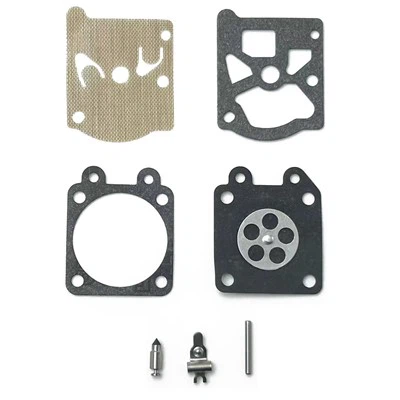
Carburetor Diaphragms And Repair Kits
Carburetor kits that could be used to repair the jammed or aged Walbro carburetors.Add to Inquiry -
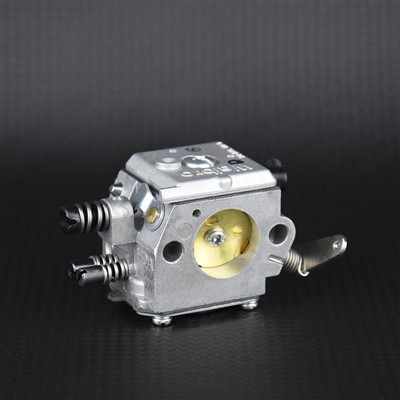
![Walbro Carburetor WT-962]()
Walbro Carburetor WT-962
Model: Walbro Carburetor WT-962. Suitable for the following engines:. X-20-S; X-20-R; X-20-S PRO;Add to Inquiry -
![Walbro Carburetor WT-978A]()
Walbro Carburetor WT-978A
Model: Walbro Carburetor WT-978A. Suitable for the following engines:. X-38-S; X-38-R; X-38-S PRO;Add to Inquiry -
![Walbro Carburetor WT-978B]()
Walbro Carburetor WT-978B
Model: Walbro Carburetor WT-978B. Suitable for the following engines:. X-40-T; X-40-T PRO. XG-40-T;Add to Inquiry -
![Walbro Carburetor HDA-246A]()
Walbro Carburetor HDA-246A
Model: Walbro Carburetor HDA-246A. Suitable for the following engines:. X-76-T; X-76-T PRO.Add to Inquiry


What is Engine Carburetor?
An engine carburetor is a device that mixes fuel and air together to help with internal combustion in an engine. They are located above the engine block, beneath the air filter, using a combination of vacuum power and cable control to send the fuel-air mixture into the engine cylinders for ignition. The speed of the air flow determines the amount of fuel drawn into the airstream. Since the 1990s, carburetors have been largely replaced by fuel injection for cars and trucks, but carburetors are still used by some small engines (e.g. lawnmowers, generators, and concrete mixers) and motorcycles. In addition, they are still widely used on piston engine driven aircraft.
Easy to Install
Our carburetors come with choke wires with plugs that work with resistors for an easy bolt-on effect, making it easy to connect to different engine sizes and models.
Flexible Operation
They increase horsepower by 5~10% for better engine performance, giving your model aircraft the new power it deserves, and can flexibly switch between idle and high-speed operation.
Durable Materials
These carburetors have durable components, such as the venturi tube being made from lightweight aluminum, while the moving parts are made from stainless steel and are finished with an anti-corrosion coating.
Safe Control
Our engine carburetors are equipped with emission control systems and use solenoid valve technology to prevent unnecessary pre-ignition in the engine and avoid damage to engine function.
Types of Engine Carburetor
There are three different types of carburetors which are described based on the direction of airflow:

Up-draft Carburetors
One of the most common types of the carburetor is up-draft. In the following type, the air comes into the carburetor from the bottom and exits from the top to go into the engine. The mixture of fuel and air is created as soon as the fuel exits from the fuel pipe and gets in contact with the air that has flown in. The throttle valve which is directly related to the accelerator aids in the passage of fuel. Once the mixture reaches the engine cylinder, the combustion process is carried out. Gravity helps the air-fuel mixture flow into the cylinder, which is why larger passageways and slower air speeds are used in this carburetor's operation.
Horizontal Type Carburetors
When there is not enough room to place the carburetor, a horizontal sort of carburetor is employed. As implied by the name, the jet tube is positioned horizontally instead of straight. The air enters the carburetor via one corner, keeping it in a horizontal posture. Before entering the engine cylinder for combustion, it blends the fuel. Horizontal carburetors help in lowering the flow of resistance since it is not positioned at a right angle direction.
Down-draft Type Carburetors
The following is the most advantageous and used type of carburetor. In the following carburetor, the air flows in from the top of the mixing chamber and the fuel comes in from the lower side of the mixing chamber. The combination of fuel and air is done here because of the low pressure produced by two venturis. The low pressure allows the fuel to let itself out from the pipe and therefore mix with the air. For fast speed and great power output, the downdraft carburetor can deliver enormous volumes of fuel when required.
Components of Engine Carburetor
Float Chamber
Float Chamber or combustion chamber is one of the important carburetor components. When a car is fully fueled, the float will automatically rise and will close the fuel valve. Float work will follow the high and low fuel conditions of a car.
When there is too much gasoline and it causes flooding, the performance of the float will not function properly. As the name implies, the combustion chamber functions as a room for combustion, and it is positioned at the cylinder head. The combustion chamber will be a place of combustion that mixes fuel with compressed air from a piston in the cylinder.
Floater
A floater is also another important component in a car, despite it being small in shape. To maintain the stability of its performance, the condition of the floater must be checked regularly.
Floaters will indeed work in high or low fuel conditions. It will not work when there is too much fuel or flooding. With the presence of a floater, the fuel condition will remain stable.
Choke Valve
The car must be made as comfortable as possible so that you and your family can carry out daily activities smoothly. The car must be kept stable and repaired immediately if there are any problems occurring. Routine maintenance is very important to do and must be done for internal and external components.
Choke Valve is a carburetor component that can provide comfort in a car. The main function of the choke valve is to add to the mixture in a car's fuel so that the vehicle will be easy to start and use for various daily activities.
Throttle Valve
The throttle valve becomes a carburetor component which is also often referred to as a piston valve. The throttle valve has a function as a regulator of how high or low the level of air mixture entering the car’s combustion chamber. The throttle valve component will usually work alongside each other with the skep needle or the main jet.
When the throttle valve is open, the main jet will open too. The throttle valve and the main jet are also sometimes considered as one single unit. The throttle valve is one of the components that needs maintenance to ensure the stable condition of your car’s performance.
Main Jet
The main Jet or a skep needle is a car component that functions to regulate how much fuel in a vehicle will be mixed or combined with clean air. The main jet has a conical shape and gets tapered downwards, allowing it to lift when the gas is pulled.
If the mixture of fuel and air gets bigger, the car will have faster performance. Although the main jet has a small form, its role is still important. To keep the performance of the main jet stable, you must carry out routine maintenance of the car and this can be done by bringing the car to the car repair shop once a month.
Jet Needle
Another important part of the carburetor is the jet needle. The jet needle component may not be known a lot by a novice, however, it’s still important to check its condition. Through regular checks, the car's performance will work well.
Slow Jet
Slow jet is a carburetor component useful for supplying clean fuel and air when the car is in an idle position. If your car is in an idle position, all you need to do is set the slow jet in the carburetor and reset the needle, so that it’s performance can return to normal.
Piston Valve Screw and Pilot Screw
Piston valve screw and pilot screw in a carburetor have no less important function to support your car’s performance. The piston valve screw and the pilot screw are indeed similar in shape to the slow jet but differ in terms of function or usability.
Main Nozzle
The main nozzle is also a less familiar carburetor component but has a very important role still. This component will work as the main transmitter of a vehicle's fuel. The height of the main nozzle is also almost the same as the surface of the fuel which is positioned in the floating basin. The main nozzle is usually found on a carburetor that has a venturi type.
Venturi
The venturi is a narrow section that is positioned in the carburetor tube and it functions to increase the speed of the airflow. With the presence of venturi, the car speed will be fast and different from other types of cars.
Your car will run faster and can beat various types of other cars. Cars that have venturi can also be used for uphill road conditions because they can support the strength or speed of the car well.
The working process of a carburettor is as follows:
(1)From the air intake, airflow comes into the top of the carburettor by passing through a filter.
(2)After a certain intake of air, a choke valve blocks the further intake.
(3)The air passes through the narrow section of venturi, the velocity increases and creates a low-pressure pocket.
(4)As the air pressure drops, fuel comes from the fuel chambers.
(5)The fuel consumption is regulated by the throttle valve.
(6)Fuel and air get mixed and come into the cylinder.
(7)The fuel supply remains intact as the float chamber continues to supply it.
(8)Gradually, fuel pressure drops, and the valve at the top opens.
(9)As the combustion mixture enters the cylinder, it sends spark ignition to the engine.
(10)As combustion happens, the whole process starts repeating again

Over time, wear and tear can occur to the carburetor, and it might need to be serviced or replaced. Some symptoms include:
Reduced Engine Performance: The most common sign something’s wrong with the carburetor would be reduced engine performance. The carburetor wearing down can cause the air-fuel mixture to be off, resulting in a decrease in acceleration and power.
Backfiring/Overheating: These are also common symptoms of carburetor failure. A lack of fuel in the air-fuel mixture can cause these two issues to happen, which in severe cases can cause severe engine damage.
Black Exhaust: There should never be black smoke coming from the exhaust! This is likely a sign that the engine is using too much fuel or is fuel-rich. This can come from a carburetor that is worn and delivering excess amounts of fuel.
Difficulty Starting: A common problem stemming from a worn carburetor is hard starts or difficulty starting the engine. Issues messing up the air/fuel ratio can result in these problems.
If you experience any of these issues, it’s a good idea to take your vehicle to a trained technician who can diagnose and fix your problem. You don’t want to cause more damage to your engine by ignoring possible signs of carburetor failure!
Maintenance Steps of Engine Carburetor
Clean Filter
For the first step, you can start by cleaning the air filter by removing this part that is attached to the carburetor hole. If it has been successfully removed, then you can clean it using a burst of air compressor. When the air filter on the carburetor is made of foam, then you can wash it thoroughly and make sure the air filter is dry before installing it back. By taking care of the air filter, the carburetor can work stably for a long time.
Remove the Carburetor Component
You can start by opening the carburetor and please remove the bolts attached to all parts of the carburetor. To prevent leaks, it is recommended that you use the correct or appropriate keys to remove the various components of the carburetor. Prepare a container filled with liquid gasoline to remove the carburetor components.
The components that must be removed include the buoy needle, pilot jet, buoy, main jet, carburetor bowl, and other components. Make sure you are careful when removing small parts or rubber protectors. If all the components come off, make sure to keep them in the same container, so that it will be easier for you to put them back together.
Clean all Parts of the Carburetor
If all the carburetor components are removed and you can immediately clean all parts of the carburetor using a soft brush. Spray the air in the holes with high air strength. You can also use fine sandpaper to clean any dirt stuck to the pilot jet.
In the pilot jet section, the sandpapering process must be carried out slowly and carefully, because the sanding process can cause changes in the size of the sandpaper. If the sandpaper on the pilot jet is too hard, its shape may shrink.
Raft Back
When the cleaning process is complete and all the components are dry, then you have to assemble the various carburetor components to their original shape. Please restart the engine and set the airplane to idle by adjusting the wind main jet by turning it clockwise.
Next, turn it back according to the standards listed in the engine.
Certificate


Our Factory


Frequently Asked Questions of Engine Carburetor
We're professional engine carburetor manufacturers and suppliers in China, specialized in providing high quality customized service, We warmly welcome you to buy or wholesale discount engine carburetor in stock here and get free sample from our factory. For price consultation, contact us.
Walbro Carburetor WT 978A, Walbro Carburetor HDA 246A, Walbro Carburetor WT 978B