

20cc Glow Engine
EPHIL: Your Trustworthy 20cc Glow Engine Supplier!
EPHIL is the leading supplier of gasoline engines and power systems for model aircraft and drones. Our company was established in 2020. Our main products include aircraft gasoline engines, glow gasoline engines and engine parts. Some models are equipped with larger air, fuel and oil filters, hardened crankshaft journals and self-draining choke carburetors . These engines are widely used in model aircraft, drones and other equipment, with powers ranging from 100 horsepower to 375 horsepower, and are exported to more than 25 countries and regions.
Rich Experienced
Our team consists of several engine engineers, electrical engineers, and product designers. We are good at engine design, production and debugging, and work closely with well-known companies such as Kenncth, Vossen, Westin, ACDelco, Coverking, etc.
High Production
We have our own R&D center and complete production workshop, equipped with professional cylinder processing, quality measurement, CNC, precision lathes and other equipment, which can fully cover the needs of large-volume urgent orders.
Quality Assurance
All the products have registered trademarks in Germany and the United States, invention and design patents in the United States, Japan and China, and have obtained CE, FCC certification and RoHS certificates.
Customized Services
These engines are widely used in remote control aircraft, aircraft models, and UAV models, and support OEM and ODM custom designs to provide versions with different capacities and strokes.
-
![XG-20cc-S Glow Gasoline Engine]()
XG-20cc-S Glow Gasoline Engine
EPHIL. XG-20CC-S. PROFESSIONAL GASOLINE ENGINE. FOR AIRPLANEAdd to Inquiry -
![XG-20cc-S Pro Glow Gasoline Engine]()
XG-20cc-S Pro Glow Gasoline Engine
EPHIL. XG-20CC-S PRO. PROFESSIONAL GASOLINE ENGINE. FOR AIRPLANEAdd to Inquiry -
![XG-20cc-R Glow Gasoline Engine]()
XG-20cc-R Glow Gasoline Engine
EPHIL. XG-20CC-R. PROFESSIONAL GLOW-TYPE. GASOLINE ENGINE. FOR AIRPLANEAdd to Inquiry -
![XG-20cc-R Pro Glow Gasoline Engine]()
XG-20cc-R Pro Glow Gasoline Engine
EPHIL. XG-20CC-R PRO. PROFESSIONAL GASOLINE ENGINE. FOR AIRPLANEAdd to Inquiry


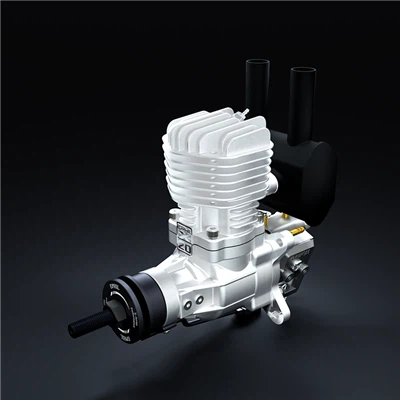

What is 20cc Glow Engine?
A glow plug engine, or glow engine, is a type of small internal combustion engine typically used in model aircraft, model cars and similar applications. Glow engines fire using glow plugs, which are heated coils that ignite the fuel mixture. The heat from the combustion keeps the glow element hot, firing the engine as long as there is fuel. A 20cc engine is a gas-powered, electronically ignited, remote-controlled airplane engine with a muffler. Its CC means cubic centimetres, refers to the amount of air and fuel that can be pushed through the cylinders in the engine.
Quick Start
The 20CC Glow engine comes with a host of extras including a muffler, spark plugs, gaskets, bolts, throttle arm extension and manual, as well as a crossbar mount, making the upgrade from Glow to gas quick and easy.
Run Smoothly
The ignition devices of these engines adopt a fully automatic electronic ignition design, which can achieve fast and smooth speed control effects and reduce noise during starting.
Easy Installation
These engines have two sealed bearings on the crankshaft and feature a rear-pump carburetor, ensuring easy installation on the road in the same mount as comparable glow engines.
Durable Material
They are made of high-hardness alloys and carbon steel materials, and their crankcases are made through CNC milling, grinding and other processing steps, so they are not easily deformed even when used in high-temperature environments.
Different Sizes of Glow Engine
01
Small Engine
The small engine size typically ranges between 1 liter to 1.9 liters. It is the most cost-effective and fuel-efficient engine. Mainly because of the reason that they carry less fuel to burn in order to generate power. Although, these engines are not able to produce more power as compared to larger engines. These are perfect only when they are used for their specific purpose, which is usually limited to a normal drive in the city.
If you want your car to run at high speeds, the engine will have to work harder to generate more power. Also, there are chances that it may lead to an increase in the fuel consumption of your car.
02
Large Engine
A 2.0-liter engine and upwards simply means that it is a large engine. These engines are more powerful than small engines(1 to 1.9 liters). Since these are bigger in size, they are also priced higher due to their ability to generate more power. Whereas more power means more speed, the amount of fuel burned is quite a lot.
03
Turbocharged Engine
As shocking as it may sound, the size of the engines does not always determine how powerful they are. These cars are quite fuel efficient without needing a higher engine cubic centimeter (CC). Due to this reason, these cars can match with cars having higher CC but lacking a turbocharged engine. For instance, some engine of a Ford 1-liters is able to generate the same amount of power as a 1.7-liter 4-cylinder engine.

What is the Cc vs. Hp of Engine?
It’s easy to say horsepower and engine displacement are two different aspects of engine performance, but how exactly do they differ?
Definition
The most obvious difference between the two is their definition. Horsepower is the measurement of engine power, while displacement is the measurement of the volume or size of the engine.
Unit of Measurement
Displacement is typically expressed in cubic centimeters, where one liter is equal to 1,000 cc. On the other hand, horsepower, or hp, is the most common unit of measurement for engine power. However, it can also be expressed in kilowatts (kW), where one hp is around 0.746 kW.
Calculation
To calculate your engine’s displacement in cubic inches, you’ll need to measure the bore or diameter of each cylinder. Multiply this by pi and the stroke of the crankshaft to get the swept volume of the piston. Then, multiply the product by the total number of cylinders.
Engine displacement = (π x (bore ÷ 2)² x stroke of the engine) x number of cylinders
Meanwhile, calculating your vehicle’s horsepower requires you to know your car’s maximum torque and maximum revolutions per minute (RPM). From there, you just have to multiply the two and then divide the product by 5,252. Horsepower = torque x RPM/5252
Influencing Factors
Did you know that several factors affect your vehicle’s engine displacement and horsepower? When it comes to engine displacement, your engine’s design, bore, stroke, and number of chambers all affect the end result. In a similar manner, engine design, tuning, capacity, and size all influence your vehicle’s horsepower. The number of valves and their timing, the type of fuel you use, and other factors also affect the horsepower.
Before diving into the equivalent electric motor options, let’s first understand the key differences between electric motors and glow engines.
Power Source
The primary difference lies in the power source. Glow engines rely on a combustion process fueled by a mixture of methanol, nitromethane, and lubricating oil. On the other hand, electric motors are powered by rechargeable batteries, which provide clean and consistent power.
Noise and Emissions
Glow engines are known for their distinct noise and exhaust emissions. The combustion process produces loud noises and releases exhaust gases, making them less ideal for noise-restricted areas. Electric motors, on the other hand, operate silently and do not produce any harmful emissions, offering a quieter and more environmentally-friendly experience.
Start and Stop Mechanism
Glow engines require a specific starting procedure, involving a glow plug igniter, fuel priming, and careful tuning. Electric motors, on the other hand, can be started with a simple push of a button. This convenience makes electric motors more beginner-friendly and easy to operate.
Maintenance
Glow engines require regular maintenance, including cleaning the carburetor, replacing glow plugs, and cleaning the exhaust system. Electric motors, on the other hand, have fewer moving parts and require less maintenance, making them easier to maintain and operate in the long run.
Power and Performance
Glow engines are known for their high power output and torque, providing impressive performance for larger RC models. Electric motors have come a long way in terms of power and performance, and while they may not match the raw power of glow engines, they offer consistent and responsive power delivery.
Flight Time
Electric motors generally have shorter flight times compared to glow engines. This is due to the limited energy capacity of batteries. However, with advancements in battery technology, the flight time of electric motors has significantly improved, and for smaller RC models, it can be comparable to the flight duration of glow engines.
Cost
Electric motors tend to have a higher upfront cost compared to glow engines. However, the cost of operating electric motors is generally lower in the long run, considering factors such as fuel costs and maintenance expenses associated with glow engines.
Factors to Consider When Choose Glow Engine Size
When selecting the size of the engine for your car, it is better to consider what you expect from your car prior to buying the engine. Moreover, those who can afford a little extra on their car can get cars with higher CC car engines. However, spending on a lightweight car engine with a low CC would be more suitable for you if you are on a low budget or simply saving your money. These engines might not be able to reach high speeds, but they are definitely more cost-effective as compared to the high CC car engines.
Running Costs
Generally speaking, the bigger the size of an engine, the more fuel it will consume. As a result, it will generate more emissions into the environment. The more emissions your car produces, the more road taxes you will have to pay.
So, if your main concern is driving around the town at low running costs, then a small car with a 1.0-liter turbocharged engine might be your best bet. However, if you love long drives, a bigger and more powerful diesel or petrol engine will be more suitable for you. Keep in mind that insurance for cars with smaller engines tends to be relatively lower, yet it depends on the model of the car.
Town Driving
If you have to drive your car daily through the town, then consider having a car with a smaller engine. There is simply no point in owning a more powerful engine than you require. The car will smaller engines is quite cost-effective too.
Motorway Driving
A mid-size diesel engine might be the most appropriate choice if you regularly drive on the motorway. Such engines offer great fuel economy along with a modest amount of grunt when you have to overtake others.
Speed
Nothing is better than a speedy car on an even road. It surely gives you a big dose of wow experience, particularly if you are a person who loves long and smooth drives. However, if you want to run your car across the uneven streets, you should get a bigger, high-power engine.
Engine Size and Economy
By now, you can likely understand that large engines with more air and fuel capacity typically require more fuel than smaller engines. However, if you are concerned about the fuel you will need and the cost you have to pay for the fuel. In such cases, a car engine with large CC might not be perfect for you.
Certificate


Our Factory


Frequently Asked Questions of 20cc Glow Engine
We're professional 20cc glow engine manufacturers and suppliers in China, specialized in providing high quality customized service, We warmly welcome you to buy or wholesale discount 20cc glow engine in stock here and get free sample from our factory. For price consultation, contact us.
XG 20cc R Pro Glow Gasoline Engine, XG 20cc S Glow Gasoline Engine, XG 20cc S Pro Glow Gasoline Engine