

Glow Gasoline Engine
EPHIL: Your Trustworthy Glow Gasoline Engine Supplier!
EPHIL is the leading supplier of gasoline engines and power systems for model aircraft and drones. Our company was established in 2020. Our main products include aircraft gasoline engines, glow gasoline engines and engine parts. Some models are equipped with larger air, fuel and oil filters, hardened crankshaft journals and self-draining choke carburetors . These engines are widely used in model aircraft, drones and other equipment, with powers ranging from 100 horsepower to 375 horsepower, and are exported to more than 25 countries and regions.
Rich Experienced
Our team consists of several engine engineers, electrical engineers, and product designers. We are good at engine design, production and debugging, and work closely with well-known companies such as Kenncth, Vossen, Westin, ACDelco, Coverking, etc.
High Production
We have our own R&D center and complete production workshop, equipped with professional cylinder processing, quality measurement, CNC, precision lathes and other equipment, which can fully cover the needs of large-volume urgent orders.
Quality Assurance
All the products have registered trademarks in Germany and the United States, invention and design patents in the United States, Japan and China, and have obtained CE, FCC certification and RoHS certificates.
Customized Services
These engines are widely used in remote control aircraft, aircraft models, and UAV models, and support OEM and ODM custom designs to provide versions with different capacities and strokes.
-
![XG-20cc-S Glow Gasoline Engine]()
XG-20cc-S Glow Gasoline Engine
EPHIL. XG-20CC-S. PROFESSIONAL GASOLINE ENGINE. FOR AIRPLANEAdd to Inquiry -
![XG-20cc-S Pro Glow Gasoline Engine]()
XG-20cc-S Pro Glow Gasoline Engine
EPHIL. XG-20CC-S PRO. PROFESSIONAL GASOLINE ENGINE. FOR AIRPLANEAdd to Inquiry -
![XG-20cc-R Glow Gasoline Engine]()
XG-20cc-R Glow Gasoline Engine
EPHIL. XG-20CC-R. PROFESSIONAL GLOW-TYPE. GASOLINE ENGINE. FOR AIRPLANEAdd to Inquiry -
![XG-20cc-R Pro Glow Gasoline Engine]()
XG-20cc-R Pro Glow Gasoline Engine
EPHIL. XG-20CC-R PRO. PROFESSIONAL GASOLINE ENGINE. FOR AIRPLANEAdd to Inquiry -
![XG-38cc-S Glow Gasoline Engine]()
XG-38cc-S Glow Gasoline Engine
EPHIL. XG-38CC-S. PROFESSIONAL GLOW-TYPE. GASOLINE ENGINE. FOR AIRPLANEAdd to Inquiry -
![XG-38cc-S Pro Glow Gasoline Engine]()
XG-38cc-S Pro Glow Gasoline Engine
EPHIL. XG-38CC-S PRO. PROFESSIONAL GASOLINE ENGINE. FOR AIRPLANEAdd to Inquiry -
![XG-38cc-R Glow Gasoline Engine]()
XG-38cc-R Glow Gasoline Engine
EPHIL. XG-38CC-R. PROFESSIONAL GLOW-TYPE. GASOLINE ENGINE. FOR AIRPLANEAdd to Inquiry -
![XG-38cc-R Pro Glow Gasoline Engine]()
XG-38cc-R Pro Glow Gasoline Engine
EPHIL. XG-38CC-R PRO. PROFESSIONAL GLOW-TYPE. GASOLINE ENGINE. FOR AIRPLANEAdd to Inquiry -
![XG-40cc-T Glow Gasoline Engine]()
XG-40cc-T Glow Gasoline Engine
EPHIL. XG-40CC-T. PROFESSIONAL GLOW-TYPE. GASOLINE ENGINE. FOR AIRPLANEAdd to Inquiry -
![XG-40cc-T Pro Glow Gasoline Engine]()
XG-40cc-T Pro Glow Gasoline Engine
EPHIL. XG-40CC-T PRO. PROFESSIONAL GLOW-TYPE. GASOLINE ENGINE. FOR AIRPLANEAdd to Inquiry -
![XG-76cc-T Glow Gasoline Engine]()
XG-76cc-T Glow Gasoline Engine
EPHIL. XG-76CC-T. PROFESSIONAL GLOW-TYPE. GASOLINE ENGINE. FOR AIRPLANEAdd to Inquiry -
![XG-76cc-T Pro Glow Gasoline Engine]()
XG-76cc-T Pro Glow Gasoline Engine
EPHIL. XG-76CC-T PRO. PROFESSIONAL GLOW-TYPE. GASOLINE ENGINE. FOR AIRPLANEAdd to Inquiry


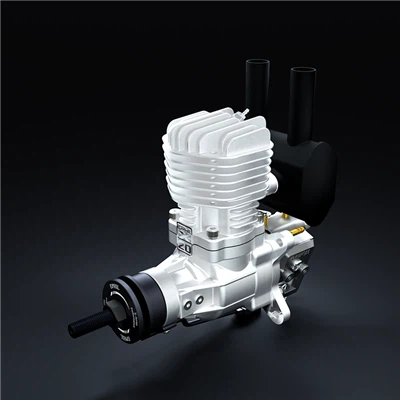


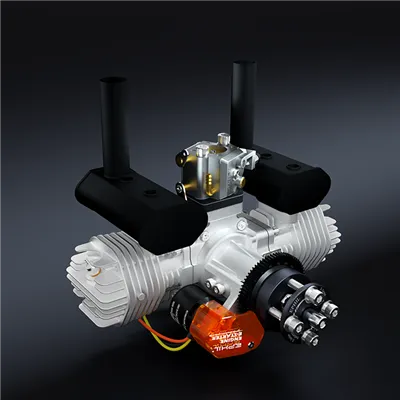


What is Glow Gasoline Engine?
A glow engine, also known as a glow plug engine, is a small internal combustion engine used in model aircraft and cars. They are lighter than gasoline engines and can put out up to 30% more power. They are primarily used for two-stroke engines that require oil mixed in the fuel and limited exhaust and fuel/air between cycles. Glow engines use a glow plug to ignite the fuel and air mixture. During the starting procedure, the glow plug is heated with an electric current, after that, the wires are disconnected and the plug's residual heat and catalytic action ignite the fuel.
Features of Glow Gasoline Engine
Wide Application
Our glow engines feature a standard dual needle carb, dual ball bearings, ABC piston/sleeve and side exhaust configuration (including muffler and glow plugs), suitable for a variety of glow engine model aircraft, small fixed wing aircraft.
Durable Material
They are manufactured using a bi-metal lining process, using double layers of plating material instead of one thick layer of plating material, allowing for a more precise fit between the piston and sleeve.
Efficient Cooling
These engines are designed with a wide-angle head structure, which provides a larger heat dissipation surface area and allows for faster cooling after high-speed operation to maintain the performance of all parts.
Easy to Install
Designed for small and medium-sized aircraft, our glow engines are small and compact and come with pre-assembled aluminum sloping beam mounting plates and housings with flexible propellers for quick integration into aircraft.
Types of Glow Gasoline Engine

Two-stroke Engine
A two-stroke engine completes one revolution for every power cycle. As the piston moves up it compresses a fresh charge of fuel. The fuel and air mixture heats and is combusted by the glow plug. The upward motion of the piston creates negative pressure within the crankcase below the piston and draws air and fuel from the carburetor through the intake valve. The combustion of the fuel mixture forces the piston down in the combustion cycle, which now compresses the fresh charge of fuel. As the piston travels down and the hollow crankshaft rotates, the intake valve is closed and the intake ports are opened. The compressed fuel charge passes through the ports and is directed into the combustion chamber. This happens just as the spent fuel charge exits the combustion chamber through the exhaust port. As the piston starts moving up again, it closes the exhaust port, opens the intake valve, and the process repeats.
Four-stroke Engines
Four-stroke engines are also extremely popular, mostly because of their wider power band, but also because of their great sound while running. Four-stroke engines are more expensive and more complicated than two-stroke engines and require more maintenance. Instead of having intake and exhaust ports, a four-stroke engine has intake and exhaust valves, as does the engine in your family car.
A four-stroke engine, although slightly more complicated and with more internal parts, produces a great sound while running and provides excellent torque for turning larger propellers. There’s a cam assembly driven by the crankshaft as well as lifter rods, tappets, and valve springs. Adjusted properly, four-stroke engines produce a good amount of power, but they produce their peak power at lower rpm than a two-stroke engine of the same displacement. In comparison, a .90-size four-stroke engine produces roughly the same power as a .60-size two-stroke engine.


The Engine Case: Themain body of the engine.
The Head:The part on top of the engine, which is usually bolted in place with four to six bolts. In its center is a threaded hole where the glow plug is installed.
The Sleeve: The inside cylinder lining that houses and guides the piston. It is a separate piece from the engine case and has openings or ports cut into its side.
Ports: Channels or openings inside the engine case that transfer the fuel and air mixture from the crankcase to the combustion chamber. The ports are opened and closed by the upward and downward motion of the piston.
Abc: To the materials used in the engine. An ABC engine is one with an aluminum (A) piston, fitted inside a brass (B) sleeve, that’s been chrome (C) plated. Most higher-quality engines have ABC construction.
The Connecting Rod:The part that attaches the piston to the crankshaft. The connecting rod has bushing at either end and is connected to the piston with a wrist pin and to the crankcase with a crankpin.
What Determines the Ignition Point of Glow Engine?
The catalytic reaction depends on two things to work: heat and pressure. The hotter the element is, the easier it will ignite. Similarly, the higher the pressure inside the combustion chamber, the easier things will ignite.
Glow Plug Temperature - Hot, Medium, or Cold?
Glow plug temperature is controlled by using different heat range plugs. There are many different heat ranges, but most fall in one of three categories: hot, medium, or cold. If you're not sure which kind to use, consult with the engine manufacturer to determine what they recommend for their engine. Using a hotter than normal glow plug will advance the ignition point, and using a colder than normal plug will retard the ignition point.
Combustion Chamber Pressure
There isn't much you can do to alter the pressure within the combustion chamber, as this is usually set by the manufacturer. You can add head shims to increase or decrease the size of the chamber, but this is something only experienced nitro users should attempt, as you can easily brick your engine if you make a mistake.
Glow Plugs and Nitro Fuel
There are very few glow plugs that are considered universal plugs (OS' #8 plug is an example). For the most part, the type of fuel you are running will impact the kind of glow plug you need to use. Another component in the nitro fuel is nitromethane. The Nitro Percentage of your fuel determines the ignition point as well; in other words, the more nitro you run, the more you advance the ignition point. Ideally, the ignition point will be when the engine is at top dead center (TDC). This will force the piston down and back up again for another stroke. But when you run higher nitro content and don't switch to a colder plug, you will advance the ignition point and result in less-than-optimum performance, since the piston is still on its compression stroke (the upward stroke) when the air/fuel mixture is ignited. In general, the higher the the nitro percentage, the colder the plug should be. Conversely, the lower the nitro percentage, the hotter the plug should be.
A glow plug engine must be operated with the correct glow plug temperature. Large engines can operate with lower temperatures, while smaller engines radiate heat to the air more quickly and require a hotter glow plug to maintain the correct temperature for ignition. The ambient temperature also dictates the best glow plug temperature; in cold weather, hotter plugs are needed. Since glow plug engines are air-cooled, an engine that "runs hot" can sometimes benefit from a lower plug temperature, although this may cause rougher idling and difficulty in tuning. The operating speed of the engine must also be considered; if the engine is to run at consistently high RPM, such as with an airplane or a car on a mostly straight track, a lower plug temperature is more efficient. If the engine is to operate at lower RPM, combustion will not heat the engine as much, and a hotter plug is required.
The fuel type and the fuel/air mixture must also be considered. The greater the nitromethane content in the fuel, the hotter the fuel will burn; high "nitro" fuels require cooler glow plugs. Lean mixtures (low fuel-to-air ratio) burn hotter than rich mixtures (higher fuel-to-air ratio) and operating temperatures can be raised to levels that can prematurely destroy the glow plug if too lean a mixture is used ("over-leaning").
If the engine slows down ("sags") when the battery power is removed, the plug temperature or the nitromethane content of the fuel should be increased, as the engine is not sufficiently hot. If the engine backfires when it is hand-cranked, it is operating too hot and the glow plug temperature or "nitro" content should be lowered.
Glow plugs have a limited lifetime and users are advised to have several replacement plugs on hand. Replacement plugs must be the correct type; plugs for turbo engines are not compatible with plugs for standard engines. The plugs should be tightened a quarter-turn past a snug fit to avoid over-tightening. Glow plugs, like all incandescent objects, are extremely hot, and glow plugs should never be removed when hot. Likewise, care must be taken when fueling because a hot glow plug can ignite fuel. Overheating of the battery can also be dangerous and only well-made connectors should be used.
Care and Maintenance of Glow Gasoline Engine
Proper engine care from the start will ensure that you get maximum power and longevity, so start caring for your engine the day you bring it home. Most engines come with tools such as Allen or hex wrenches to tighten and loosen the screws that hold the engine together. Keep these in a safe place and if you lose them, be sure to replace them with the correct sizes.
Glow engines need to be installed on your airplane with a strong, rugged mounting system. Your propeller should be the recommended size and properly balanced. Notice the wire extension added to the main needle valve to keep fingers clear of the propeller.
Start by removing the engine’s backplate and checking inside the crankcase for metal shavings or other foreign material. Remove the head and check the combustion chamber for the same. Squirt some 3-in-One Multi-Purpose Oil into the engine and turn the engine over. Lubricate the bearings as well as the connecting rod bushings. Check to make sure the ports in the sleeve match the ports cast or machined into the engine case. Now reassemble the engine and tighten the screws in a crisscrossing pattern. Do not use threadlocker compound on the engine case or head screws. It is not required and will make future maintenance difficult. You could strip the threads out of the holes. Never force anything that won’t go on or move easily. The engine is made mostly of aluminum and it is easy to damage threads. Always use the proper size wrench to tighten the propeller nut; never use vice grips or pliers. A 6-inch adjustable wrench is a good tool to keep in your field box. After the last flight of the day, drain the fuel from the tank and run the engine dry. Squirt some after-run oil into the carburetor to coat the inside surfaces of the engine to prevent corrosion. Alcohol-based fuels attract moisture and unprotected engine surfaces will corrode—especially the ball bearings. Oil is inexpensive insurance for a long engine life.
Certificate


Our Factory


Frequently Asked Questions of Glow Gasoline Engine
We're professional glow gasoline engine manufacturers and suppliers in China, specialized in providing high quality customized service, We warmly welcome you to buy or wholesale discount glow gasoline engine in stock here and get free sample from our factory. For price consultation, contact us.
